
Daycare
What to Expect on Your Dog’s First Day of Daycare
The first daycare visit is an introduction, not a performance test. Good care makes room for observation, play, rest, and adjustment.
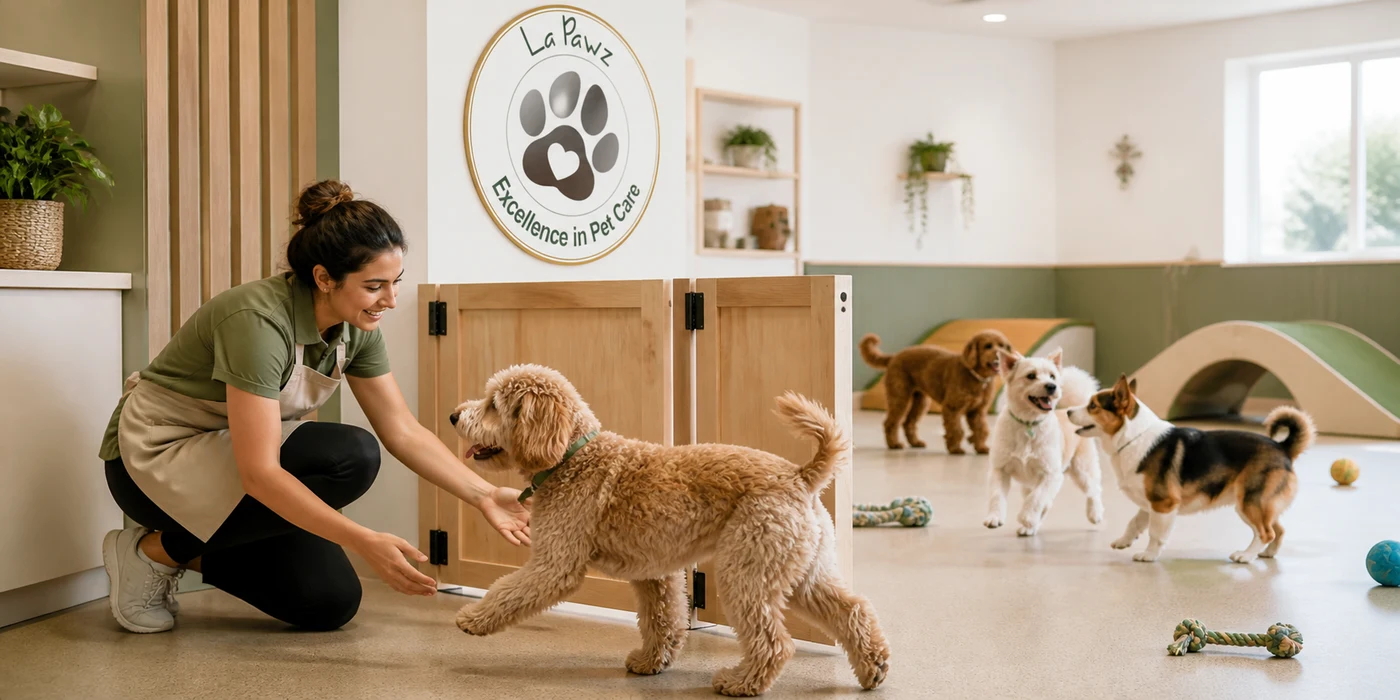
On a first daycare day, the most important goal is not nonstop play. It is helping the care team understand how your dog responds to a new place, new people, other dogs, activity, and rest.
Before arrival
Confirm current attendance and vaccination requirements in advance. Share accurate contact information and disclose recent coughing, vomiting, diarrhea, parasites, or other signs of illness. A dog who appears unwell should not attend group care; ask your veterinarian when participation is appropriate.
The American Veterinary Medical Association explains that respiratory infections can spread where dogs gather. Facilities and veterinarians use risk-based prevention practices, so ask both about the requirements appropriate for your dog.
Feed and exercise according to the facility’s instructions. Avoid introducing a brand-new meal or intense activity immediately before arrival. Bring only requested items and label everything.
The AAHA guidelines, updated in 2024, now classify leptospirosis vaccination as core for all dogs. Ask your veterinarian about your dog’s schedule and the facility separately about admission requirements.
What staff need to know
Useful information is specific:
- Previous experience around unfamiliar dogs
- Preferred play style and energy level
- Sensitivity to gates, leashes, touch, noise, or separation
- Any history of guarding food, toys, spaces, or people
- How your dog signals discomfort or needs a break
- Whether your dog settles in a crate, kennel, room, or quiet area
Avoid minimizing behavior because you want the visit to work. Honest details help staff make safer decisions.
The introduction
Facilities may use different evaluation processes. Staff may observe body language, recovery after excitement, responses to greetings, and whether the dog can take breaks. Size is one consideration, but compatible play style, comfort, and arousal level matter too.
Some dogs join a group quickly. Others need a slower introduction, a smaller group, one-on-one time, or a different care arrangement. That is useful information—not a failure.
Why rest belongs in daycare
Healthy daycare is not hours of uninterrupted wrestling. Dogs can become overtired and less able to make good social choices. Appropriate quiet periods, water, individual attention, and lower-intensity activity help make the day sustainable.
After a first visit, your dog may sleep more than usual. Extreme exhaustion, prolonged stress behaviors, coughing, vomiting, diarrhea, limping, or other concerning changes warrant a call to the facility and, when appropriate, a veterinarian.
Questions to ask at pickup
Try questions that reveal more than “Did my dog have fun?”
- Did my dog settle after I left?
- What kind of play did they choose?
- Were there moments when they needed space?
- Did they rest and drink normally?
- What group or activity seemed to fit best?
- Is there anything I should practice before another visit?
Set up the next visit thoughtfully
Daycare works best when the frequency fits the dog. Some dogs enjoy regular attendance; others prefer occasional visits or quieter enrichment. Watch how your dog behaves before arrival, during handoff, and after returning home.
La Pawz weekday daycare is $27 per dog, per day, with a five-day package for $125 and a ten-day package for $230. A second dog from the same household receives 15% off, and a complimentary bath is included after ten paid daycare visits. Hours are Monday through Friday, 8:30 AM to 5:00 PM. Request a first daycare visit and tell us about your dog’s social history and preferences so our team can confirm the right next step.