Pet Health
Dog Anal Gland Expression: When It Helps and Who to See
Scooting and a fishy smell can raise questions about anal glands. Learn when expression helps, when it is unnecessary, and which signs need veterinary care.
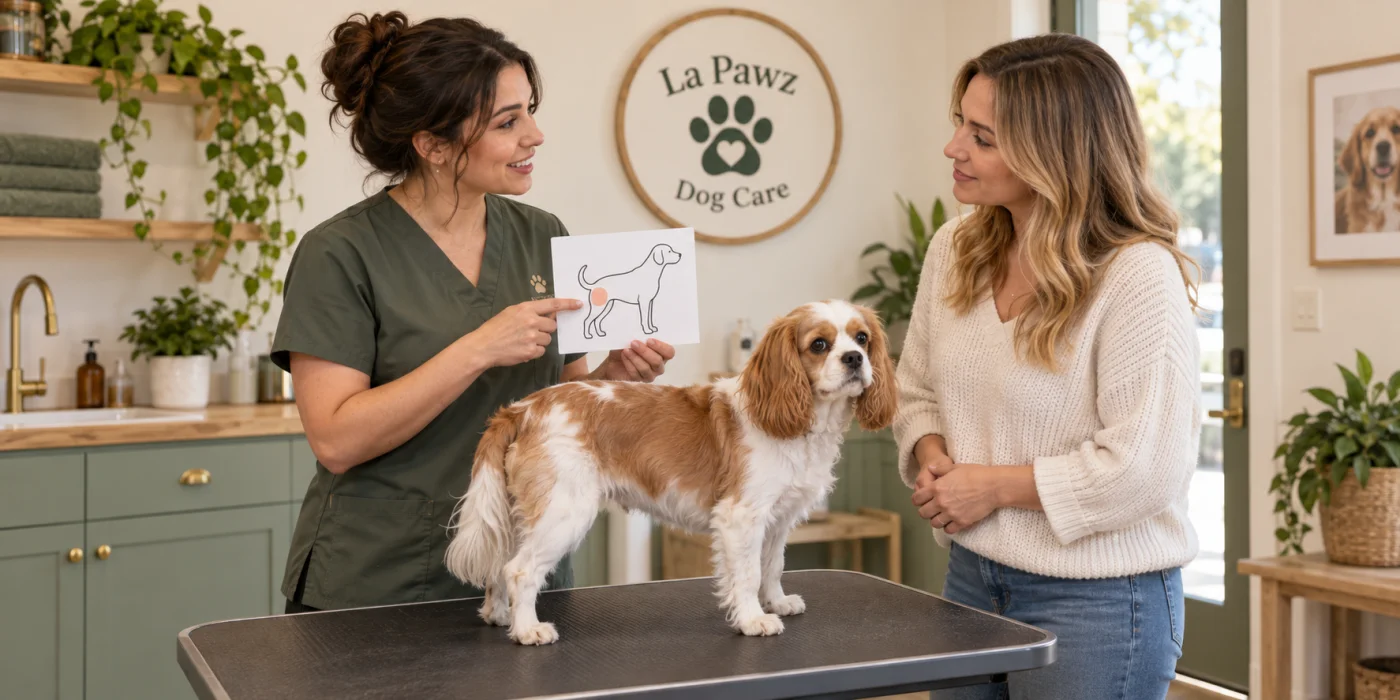
Your dog slides across the rug, turns to lick under the tail, or suddenly leaves a fishy smell on the couch. It is tempting to add “express the anal glands” to the next grooming appointment and consider the problem solved. Sometimes a dog does need help emptying those sacs. Sometimes the same behavior has a different cause.
At La Pawz Dog Care in Plano, we want pet parents to understand the difference before choosing an appointment. Anal gland expression can be useful when needed, but it is not an automatic wellness treatment for every dog. New, persistent, painful, or recurring symptoms belong with a veterinarian.
What are anal glands, and what does expression mean?
The structures commonly called anal glands are two small anal sacs beside the anus. Glands in their lining produce a strong-smelling secretion. Normally, pressure during a bowel movement helps release it. Manual expression means applying pressure to empty retained contents; it does not remove the sacs or permanently stop secretion.
The Merck Veterinary Manual’s owner guide describes problems ranging from blocked sacs to infection and abscesses. “Full” and “infected” are not interchangeable descriptions, and a groomer cannot establish that distinction by looking at your dog’s coat.
Is anal gland expression good for dogs?
It can be helpful for a dog with a confirmed need. It is not inherently better care simply because it appears on a service menu.
Most dogs empty their sacs naturally. Unnecessary or forceful expression can irritate or injure delicate tissue, according to the American Kennel Club’s scooting guidance. A comfortable dog with no history of problems does not automatically need expression with every bath.
Ask a useful question: “What problem are we trying to address?” If the answer is an existing veterinary plan, share that plan. If the answer is only “We always do it,” ask whether it is actually appropriate for your dog. There is no single monthly schedule that suits every pet.
Which dogs are more prone to anal gland problems?
Any dog can develop trouble. Small dogs are affected more often, but size alone does not determine whether expression is needed.
A Royal Veterinary College study of UK veterinary records found higher risk in several breeds, including Cavalier King Charles Spaniels, Cockapoos, Shih Tzus, and Bichon Frises. These are population findings, not a diagnosis or a reason to routinely express every dog of those breeds.
Cornell’s anal sac disease overview also identifies obesity, chronic diarrhea or constipation, allergies, and anatomical differences as potential contributors. A history of repeated problems deserves attention to the underlying cause, rather than progressively more frequent salon appointments.
Signs your dog may have an anal sac issue
Watch for a change from your dog’s usual behavior:
- Repeated scooting or dragging the rear along the ground
- Frequent licking or chewing beneath the tail
- A strong fishy odor or unexpected discharge
- Reluctance to sit, tail held down, or sensitivity around the rear
- Straining or discomfort during bowel movements
- Redness, swelling, blood, or a wound beside the anus
The Merck Veterinary Manual’s clinical overview connects scooting, licking, and painful defecation with anal sac disease. These signs warrant assessment; they do not confirm the diagnosis at home.
Scooting does not always mean “express the glands”
Feces caught in the coat, skin irritation, parasites, and other problems can also cause scooting. The PDSA guide to scooting recommends veterinary assessment unless the cause is obvious and simple to resolve.
One brief scoot is different from a pattern that keeps returning. Notice when it happens and whether your dog seems uncomfortable. An isolated odor can also occur when sacs release during stress or excitement. Neither smell alone nor a video of scooting tells you whether there is a blockage.
Avoid repeatedly squeezing the area to “check.” If your dog guards the rear, pulls away, or cries, stop handling and call the veterinary team.
When should you see a veterinarian?
Call your veterinarian promptly for new or persistent symptoms, and request same-day advice for swelling, significant pain, blood, pus, or an open wound. A dog that cannot pass stool, seems very unwell, or has severe pain needs urgent veterinary attention; use an emergency clinic if your regular veterinarian is unavailable.
A new lump should also be examined rather than assumed to be a full gland. VCA’s anal sac disease guide explains that different conditions can produce similar symptoms. Treatment may require more than emptying, such as veterinary examination, pain relief, or treatment of infection.
Do not wait for a grooming opening when medical signs are present. When calling the clinic, describe what you can see and how your dog is acting. “A swollen spot beside the anus and difficulty sitting since this morning” is more useful than guessing at a diagnosis.
When can a groomer help?
A groomer can help with external hygiene, sanitary trimming, and keeping surrounding coat manageable when the skin is healthy and handling is comfortable. That can be relevant when long hair holds debris, but it does not treat a blocked or infected sac.
Some groomers offer external expression, using pressure from outside. Veterinary teams may use an internal examination and expression to assess and empty the sacs. These are not equivalent services. Pain, suspected impaction, infection, lumps, or recurrent problems should be assessed by the veterinary team.
If your veterinarian recommends ongoing nonmedical maintenance, ask what method and provider they want you to use. Then confirm whether the groomer offers that service and can follow the plan. Do not assume expression is included or appropriate just because you booked a bath.
Before a La Pawz visit, contact our Plano team about your dog’s history and the requested care. We can discuss grooming needs and whether a veterinary visit should come first.
What helps when problems keep returning?
Repeated scooting after expression is a reason to check back with the veterinarian, not simply request another squeeze. Ask whether stool quality, body condition, allergies, or another issue needs investigation.
PDSA’s blocked-gland guidance discusses weight management and dietary changes for selected dogs. Fiber is not a universal fix, and adding supplements without a plan can complicate the picture. Discuss your dog’s current food, treats, stools, and medications before changing anything.
Keep a simple record: the date symptoms appeared, what you observed, whether expression or treatment occurred, and how long improvement lasted. Bring those notes to appointments so each professional starts with the same information.
A practical plan for Plano pet parents
Before your next appointment, write down three things: what changed, when it started, and what care has already been recommended. Include previous infections or painful experiences, not just the last expression date.
For an otherwise comfortable dog needing coat cleanup, ask about routine grooming and a manageable sanitary trim. For ongoing skin sensitivity, our sensitive-skin guide explains how grooming can support veterinary direction. For repeated scooting, pain, swelling, or discharge, book the veterinarian first.
Anal gland care should match the dog in front of you. The goal is a comfortable dog and the right professional at the right time—not expression at every visit. Once medical concerns have been addressed, request a grooming appointment with La Pawz Dog Care and tell us what your veterinarian recommends.