Grooming
Do-It-Yourself Dog Matting Prevention: A Practical At-Home Guide
Mat prevention is one of the most useful things pet parents can do between grooming appointments. The secret is a small, repeatable routine before tangles tighten.
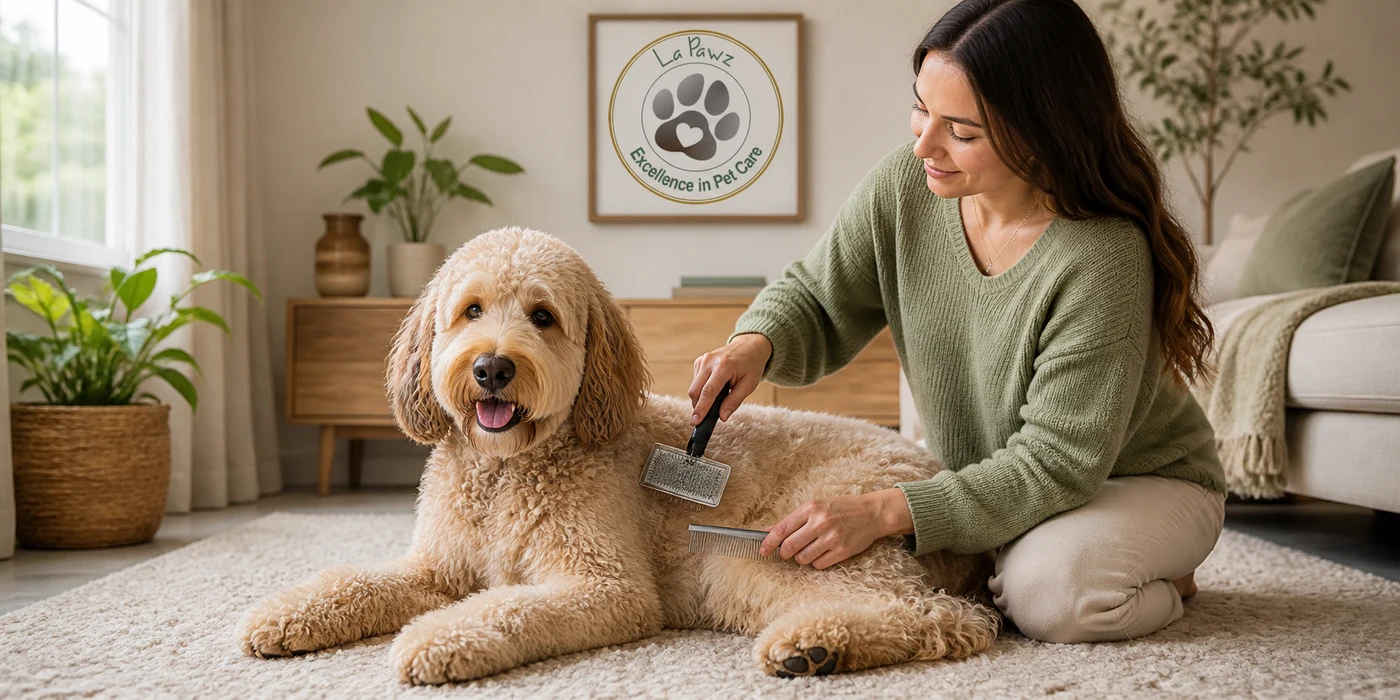
Matting prevention is one of the most useful things a dog owner can do between professional grooming appointments. It keeps the coat more comfortable, makes salon visits easier, and helps prevent small tangles from turning into tight mats that pull at the skin.
The trick is not heroic brushing once a month. The trick is a small, repeatable routine before tangles tighten.
At La Pawz Dog Care in Plano, we see the same pattern often: a dog looks fluffy on the outside, but hidden friction areas have started to lock together underneath. By the time the owner notices, the coat may be too tight to brush comfortably. The good news is that most matting is preventable with the right tools, timing, and expectations.
What a mat really is
A mat is a clump of hair that has tangled and compacted. Loose coat, dirt, moisture, collar friction, harness rubbing, movement, and static can all help tangles tighten. Curly, wavy, long, silky, and dense coats are especially prone to matting because shed hair may stay trapped instead of falling away.
Mats usually form first in high-friction areas:
- Behind the ears
- Under the collar
- Under harness straps
- In the armpits
- Around the chest
- On the belly
- Around the rear and tail
- Between the back legs
- In beard and face furnishings
- Around feet and toes
The American Kennel Club notes that mats often begin in friction areas, including where the front legs and chest meet, and may also start from dampness or outdoor debris. Once a mat tightens, it can become uncomfortable and difficult to remove.
Choose prevention over rescue brushing
The safest matting strategy is prevention. A tiny tangle can often be loosened gently. A tight mat close to the skin is a different problem. Pulling hard can hurt. Overbrushing one spot can irritate the skin. Trying to cut mats out with household scissors can injure a dog badly because skin can be pulled into the mat.
The ASPCA warns owners never to cut mats out with scissors and recommends visiting a groomer or veterinarian when a mat cannot be brushed out easily. That advice is worth taking seriously. Dogs wiggle, skin stretches, and mats can hide where the skin begins.
If the mat is tight, large, painful, damp, smelly, or close to sensitive areas, pause and book professional help.
Build a simple home toolkit
You do not need a drawer full of gadgets. Most owners need a few coat-appropriate basics:
- A slicker brush for many curly, wavy, long, or dense coats
- A metal comb for checking whether the coat is actually brushed through
- A pin brush for some longer silky coats
- A rubber curry or bristle brush for short coats
- A dog-safe detangling or conditioning spray, if appropriate
- Treats for calm handling practice
- A nonslip surface so the dog feels secure
Ask your groomer which tools match your dog’s coat. The wrong tool can be ineffective or irritating. A slicker that helps a doodle may be unnecessary for a short-coated dog. An undercoat tool used too aggressively can scratch skin or damage coat.
The ASPCA dog grooming guide recommends brushing and combing based on coat type, with long-haired dogs often needing daily attention and other coats needing less frequent care.
The comb is the truth teller
Many owners brush the top layer and assume the coat is finished. Then the groomer finds mats near the skin. That is why the metal comb matters.
Use the brush first to loosen and separate the coat. Then use a comb to check your work. If the comb glides from the skin outward without catching, that section is in good shape. If the comb stops, snags, or bounces over a fluffy surface, there is still a tangle underneath.
Work in small sections. Part the coat gently with your fingers. Brush from the ends first, then gradually work closer to the skin. Do not dig hard into the skin. If your dog flinches, turns, licks lips, pulls away, or gets restless, slow down or stop.
Focus on five-minute routines
A five-minute routine is easier to maintain than a full-body grooming session. Pick one or two zones each day:
- Monday: ears and collar area
- Tuesday: armpits and chest
- Wednesday: belly and sanitary-area edges
- Thursday: legs and feet
- Friday: tail and rear
- Weekend: full comb check
For high-maintenance coats, daily or near-daily touchpoints may be needed. For lower-maintenance dogs, a few times per week may be enough. The schedule depends on coat type, length, activity, weather, and grooming style.
If your dog swims, plays in rain, wears sweaters, wears a harness daily, or enjoys rolling in grass, increase checks around friction areas.
Never brush a dirty, wet, tight coat aggressively
Bathing can help a coat, but timing matters. Water can tighten existing tangles, and shampooing a matted coat may make the problem worse. Before bathing at home, brush and comb thoroughly. After bathing, dry the coat completely, especially near the skin and in dense areas.
The ASPCA recommends brushing before bathing to remove dead hair and mats, using pet-formulated shampoo, and drying thoroughly. Human products, harsh fragrances, and incomplete rinsing can irritate some dogs.
If your dog’s coat is already matted, skip the home bath and call a groomer. Wet mats can become tighter, heavier, and harder to remove.
Teach your dog to enjoy handling
Mat prevention is not only about hair. It is also about trust. Dogs who are comfortable being touched are easier to maintain.
Practice when your dog is calm. Touch an ear, give a treat, and stop. Lift a paw briefly, treat, and stop. Brush one small section, treat, and stop. Keep sessions short enough that your dog succeeds.
Do not chase your dog with a brush. Do not force long sessions when your dog is tired or overwhelmed. A dog who learns that brushing is predictable and rewarding will be easier to groom at home and in the salon.
Know when to book sooner
Home care works best when paired with professional grooming. If your dog is matting before the next appointment, the schedule may be too long, the haircut may be too long for your home routine, or the coat may need a different maintenance plan.
Book sooner if you notice:
- The comb no longer reaches the skin
- Tangles return within a day or two
- Your dog resists brushing a specific area
- Mats form under the collar or harness
- The coat smells musty
- Skin looks red, flaky, damp, or irritated
- Your dog is licking or chewing one spot
Groomers can remove loose coat, trim high-friction areas, adjust style length, and show you where mats are starting. If skin looks injured, infected, painful, swollen, or unusually irritated, a veterinarian should evaluate it.
Match the haircut to real life
Long fluffy styles are beautiful, but they require work. If the home brushing routine is not realistic, a shorter trim may be kinder. That is not a failure. It is practical care.
For many doodles, poodles, bichons, Shih Tzus, Maltese, Yorkies, and mixed breeds, a manageable style protects comfort and keeps appointments positive. La Pawz’s Platinum Coat Care Plan is designed for dogs who need regular coat maintenance, face trims, sanitary trims, brush-outs, and predictable scheduling.
Dogs with dense shedding coats may fit better with Double-Coat Maintenance, while many family dogs do well with routine grooming appointments and owner brushing between visits.
The La Pawz takeaway
Do-it-yourself matting prevention is not complicated, but it does need consistency. Use the right tools, brush in small sections, check with a comb, focus on friction zones, keep sessions gentle, and avoid scissors around mats.
If your dog is already tangled, matting quickly, or uncomfortable when brushed, request an appointment with La Pawz Dog Care in Plano. We can help reset the coat safely and recommend a home routine that fits your dog’s coat and your real schedule.