Grooming
How Often Should Your Dog Be Groomed?
Most dogs benefit from a consistent grooming rhythm, but the right interval depends on coat, lifestyle, and what happens between appointments.
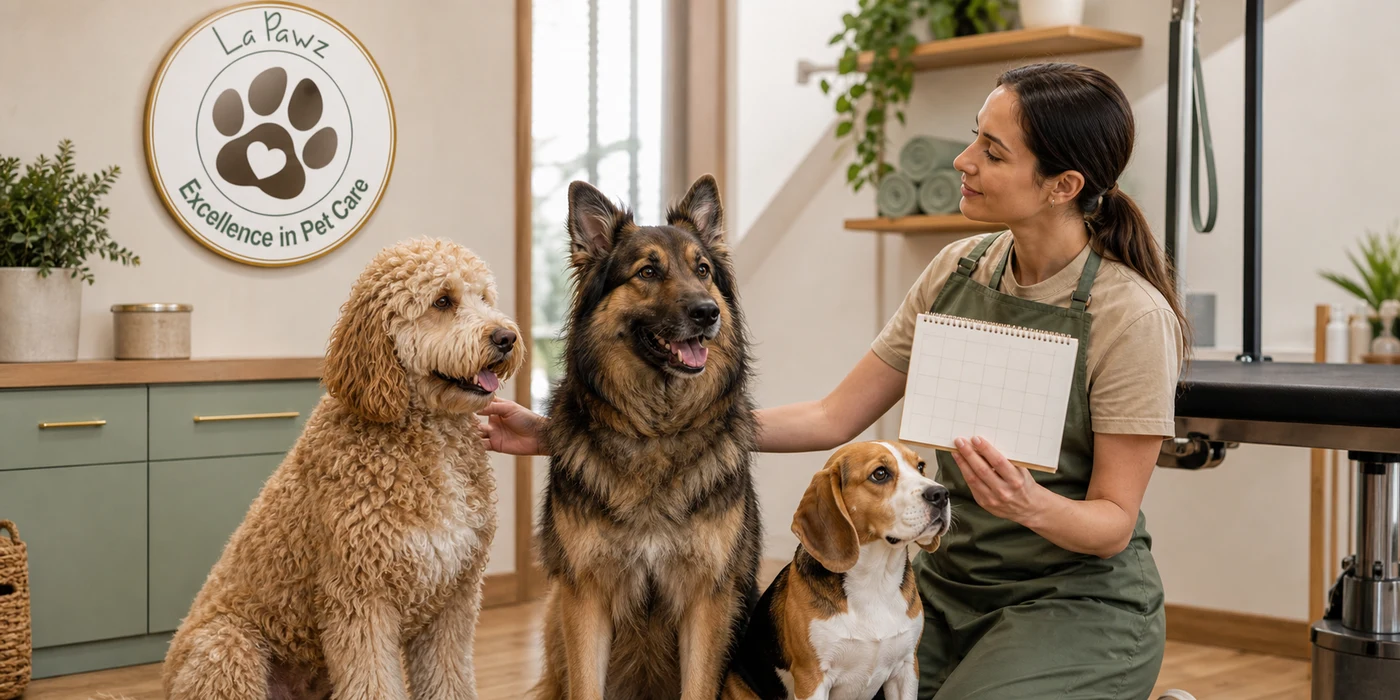
Most dogs do best on a predictable grooming schedule rather than waiting until the coat looks overdue. A useful starting point is every four to eight weeks, but the best interval depends on coat growth, shedding, matting risk, skin needs, lifestyle, and home brushing.
Start with coat type
Dogs with continuously growing hair—such as poodles, many doodles, bichons, shih tzus, and similar coats—often need professional care every four to six weeks. Regular bathing, drying, brushing, and trimming can keep the coat manageable and reduce the chance that tangles become tight mats.
Double-coated dogs such as golden retrievers, German shepherds, Australian shepherds, and huskies usually need a different approach. Their schedule may focus on bathing, thorough drying, brushing, and seasonal undercoat removal rather than frequent haircuts. The American Kennel Club’s grooming overview explains that bathing frequency varies with coat and lifestyle and cautions against using products that are not intended for dogs.
Short-coated dogs may not need haircuts, but that does not make them maintenance-free. Nails, ears, shedding, skin folds, and coat cleanliness still benefit from attention.
Look at daily life, not only breed
Two dogs of the same breed can need different schedules. A dog that swims, rolls in grass, attends daycare, or spends time on North Texas trails may need more frequent bathing and brushing than a mostly indoor dog. A longer style requires more home maintenance than a short practical trim.
Consider:
- How quickly the coat tangles
- Whether loose undercoat collects around the home
- How often the dog is brushed thoroughly
- Whether nails touch the floor while standing
- The dog’s comfort with longer appointments
- Seasonal changes in activity and shedding
Why waiting can make grooming harder
When tangles tighten close to the skin, brushing can become uncomfortable and time-consuming. A heavily overdue coat can also hide visible skin changes. The ASPCA’s grooming guidance recommends regular brushing and notes that mats can be painful.
Consistency also helps dogs learn the routine. Familiar handling, sounds, and steps can make future visits more predictable—especially when owners and groomers communicate about what the dog finds easy or difficult.
A practical schedule to discuss
Use these intervals as conversation starters, not fixed medical rules:
- Every 4–6 weeks: high-maintenance styled coats, mat-prone coats, or dogs needing frequent face and sanitary maintenance
- Every 6–8 weeks: many small and medium companion dogs with consistent home brushing
- Every 4–8 weeks seasonally: double coats during heavier shedding, adjusted during quieter periods
- As individually recommended: senior dogs or dogs whose comfort, skin, or veterinary care changes the routine
Between appointments, brush with tools suited to the coat, check high-friction areas such as behind the ears and under the legs, and monitor nail length. If brushing pulls or the dog becomes uncomfortable, stop and ask a professional for help.
Choose a repeatable plan
The best schedule is one your household can maintain. Tell your groomer about the style you prefer, time available for home brushing, activity level, and any handling concerns. At La Pawz, you can request a grooming appointment or explore Wellness Care Plans for a more consistent coat-care rhythm.
Visible redness, sores, sudden hair loss, strong odor, persistent scratching, or pain should be discussed with a veterinarian rather than handled as a routine grooming issue.