Grooming
Your Puppy’s First Grooming Appointment: How to Make It a Calm Beginning
A puppy’s first grooming visit is bigger than a haircut. With gentle preparation and realistic expectations, it can become the first step in a lifetime of comfortable care.
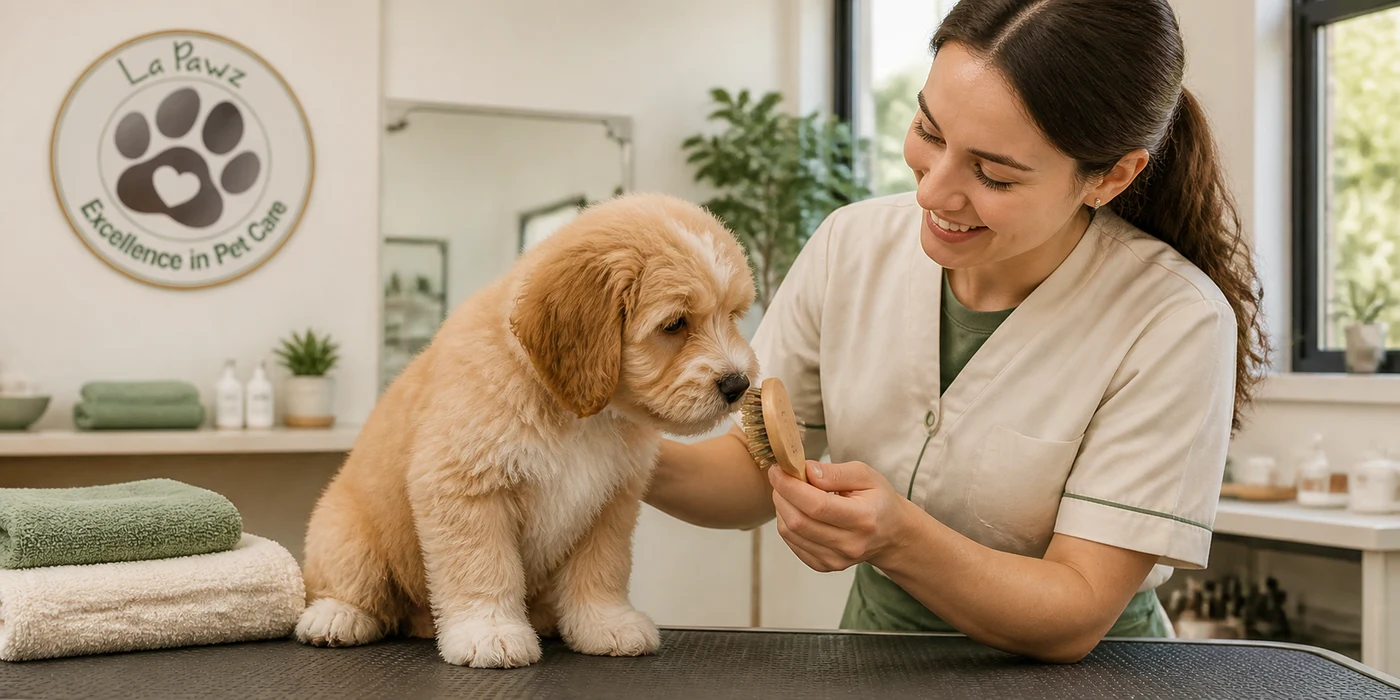
The first time a puppy walks into a grooming salon, almost everything is new: the people, scents, dryers, water, tools, and grooming table. Even a confident puppy may pause at the door and wonder what happens next.
That moment is why we think of a puppy’s first grooming appointment as an introduction, not a beauty contest.
At La Pawz Dog Care in Plano, the goal of an early visit is to help a puppy discover that grooming can be safe, predictable, and full of patient encouragement. A polished haircut is lovely, but a positive foundation is more valuable. Puppies who learn to accept gentle handling, brushing, bathing, drying, nail care, and short periods of standing are better prepared for the routine care they will need throughout life.
You do not need a perfectly trained puppy before booking. A few small habits at home, however, can make that first visit feel much easier.
When should a puppy have a first grooming appointment?
The best timing depends on the puppy’s age, health, vaccination progress, coat, and the salon’s requirements. Ask your veterinarian when it is appropriate for your puppy to visit a grooming environment, and ask the groomer which records are required before the appointment. Avoid relying on a universal age because puppies do not all follow the same health schedule.
Once your veterinarian and groomer agree the timing is appropriate, it often helps not to wait until the coat is overgrown, tangled, or uncomfortable. An early, simple visit gives the puppy a chance to learn before a complicated haircut is necessary.
The American Kennel Club’s guidance on early handling and grooming emphasizes helping puppies become comfortable with brushing, nail care, ear handling, and grooming spaces. That preparation matters for every breed, including short-coated dogs. All dogs need some combination of coat, nail, paw, ear, and hygiene care.
Practice tiny moments of handling at home
Preparation does not mean recreating a salon in your bathroom. It means teaching your puppy that calm touch predicts something pleasant.
Choose a quiet moment when your puppy is not bursting with energy. Touch one paw for a second, offer a small treat, and let go. Lift an ear flap gently, reward, and stop. Briefly touch the chin, tail, and collar. Keep each interaction light.
Over several days, build a simple routine:
- Touch and briefly hold each paw
- Gently separate the toes without pulling
- Stroke the ears inside and out
- Lift the chin for one or two seconds
- Touch the legs, chest, belly, and tail
- Let a soft brush make one or two passes over the body
- Reward relaxed behavior and end before the puppy becomes frustrated
The AVMA’s socialization guidance recommends gradually introducing dogs to different forms of handling, including having their paws, tails, and ears touched. The key word is gradually. Holding a struggling puppy until they “give up” can make the next session harder. Brief, successful repetitions build trust more effectively.
Introduce the tools without trying to finish a groom
To a puppy, a brush may look like a chew toy. A hair dryer may sound like a monster. Nail clippers can feel suspicious before they ever touch a nail.
Let your puppy investigate a brush, then reward calm curiosity. Make one gentle stroke over the shoulder and put it away. On another day, turn on a household dryer across the room for a moment—on a cool, low setting and never pointed at your puppy—then pair the sound with treats or play.
These exercises simply make new sights and sounds less surprising. If your puppy backs away, freezes, hides, refuses food, or becomes frantic, increase the distance or stop. Progress should look like growing comfort, not forced tolerance.
Keep the coat comfortable before the appointment
A first grooming visit becomes more difficult when a puppy arrives with tight tangles. Mats pull at the skin, limit styling options, and can turn an introductory appointment into a long problem-solving session.
Use a brush and comb that match your puppy’s coat. For curly, wavy, long, or fluffy coats, work in small sections and check that a metal comb can move gently from near the skin through the ends. Pay special attention behind the ears, under the collar, in the armpits, around the legs, and beneath harness straps.
If you find a tight mat, do not cut it out with household scissors. Puppy skin is thin and can be pulled into the tangle where you cannot see it. Call the groomer and explain what you found. Our at-home matting prevention guide offers a practical routine for keeping friction areas manageable between appointments.
Help your groomer understand your puppy
Good communication starts before drop-off. Tell the groomer whether this is truly the puppy’s first professional visit and describe any home practice you have done. Share what your puppy enjoys, what causes hesitation, and how they respond to strangers, brushing, paw handling, water, or loud sounds.
Also mention:
- The puppy’s age, breed or likely coat mix, and current routine
- Any tangles, skin changes, scratching, or tender areas you have noticed
- Previous grooming, veterinary, shelter, or breeder experiences
- Known medical conditions or veterinarian instructions
- Any history of fear, snapping, or escape attempts
- The haircut you hope to maintain as the puppy grows
Honesty helps the groomer plan a safer appointment. A worried puppy is not a “bad dog,” and a first visit does not need to include every possible service to be successful.
Keep the morning calm and ordinary
Puppies notice our emotions. A rushed departure or dramatic goodbye can add excitement to an already new experience.
Give your puppy time to use the bathroom before leaving. Follow the salon’s instructions, bring required records, and provide a current phone number. Use a secure leash or carrier for arrival.
At drop-off, be warm but confident. A simple goodbye tells your puppy that you trust the people caring for them. Let the grooming team guide the handoff and remain reachable in case they need to discuss the puppy’s comfort, coat condition, or pickup time.
What happens during a first puppy groom?
The exact services vary by puppy. A first visit may include a bath, gentle drying, brushing, combing, nail care, ear-area cleaning, a sanitary trim, paw-pad tidying, or light trimming around the face and feet. For some puppies, a shorter introduction is the right choice.
A thoughtful groomer watches the whole dog, not just the coat. Is the puppy able to take treats? Can they stand comfortably? Are they curious, wiggly, sleepy, uncertain, or overwhelmed? Do they recover after a surprising sound? Those signals help determine what can be completed without turning the appointment into a battle.
The result may not be a dramatic haircut. That is okay. A puppy who leaves feeling safe has accomplished something important.
Plan for a sleepy puppy afterward
Grooming asks a young dog to process many sensations. Your puppy may be tired afterward, so offer water, a bathroom break, and a quiet place to rest.
Notice what the groomer shares. Your puppy may have done beautifully with brushing but needed extra time for the dryer. Paw handling might have been easy while face trimming was still too exciting. These details tell you what to practice gently at home.
If you notice persistent coughing, vomiting, diarrhea, breathing difficulty, swelling, marked pain, unusual weakness, or a significant skin reaction after any appointment, contact your veterinarian. Groomers can report visible observations, but medical symptoms need veterinary evaluation.
Consistency turns a first visit into a life skill
The first appointment matters, but the visits that follow build the habit. A predictable schedule prevents the coat from becoming difficult and gives your puppy more chances to practice while the experience is still familiar.
How often your dog needs professional care will depend on coat type, length, shedding, lifestyle, and the style you want to maintain. Our guide to how often a dog should be groomed can help you start that conversation. Between visits, continue short handling exercises and reward calm cooperation.
One day, the puppy who hesitated at the salon door may walk in with a wagging tail because they recognize the routine and the people. That confidence is built in small moments: one paw held gently, one brush stroke, one treat, and one patient appointment at a time.
If your puppy is ready for a kind introduction to professional grooming, request a grooming appointment with La Pawz Dog Care in Plano. Tell us it is your puppy’s first visit, and we will help you plan a comfortable beginning that supports years of easier coat care.