Grooming
How Often Should You Trim Your Dog’s Nails? Signs It’s Time
A calendar can remind you to check your dog’s nails, but their paws tell you when it is really time. Learn the signs and how to make nail care calmer.
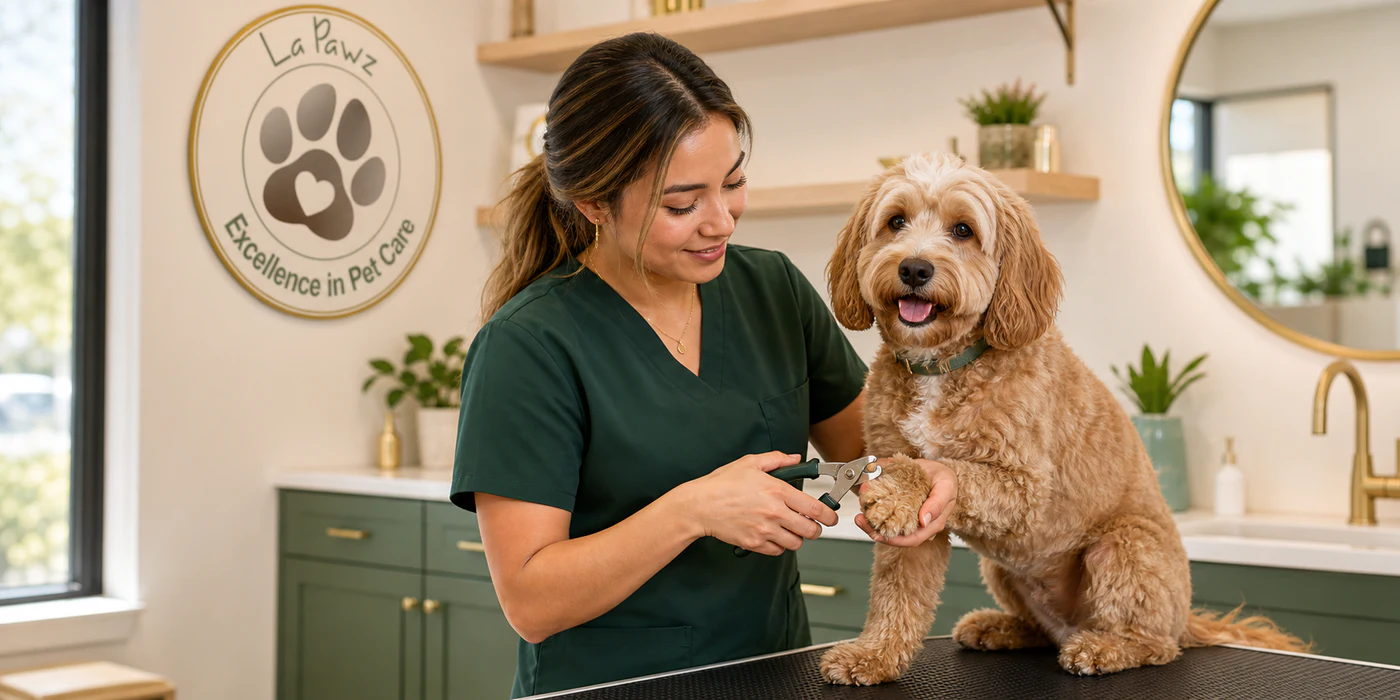
You hear it before you see it: click, click, click across the kitchen floor. Your dog trots toward you, tail wagging, while every step adds another reminder that a nail trim may be due.
That familiar sound is useful, but it is not the only clue. Some dogs naturally wear their nails down on long walks over firm surfaces. Others spend more time on grass, carpet, or soft trails and need help more often. Age, activity, paw shape, nail growth, health, and even which toe you are checking can all change the schedule.
At La Pawz Dog Care in Plano, we encourage pet parents to treat nail care as a routine check rather than a last-minute rescue. A steady rhythm keeps each trim smaller and makes the process easier to practice.
The short answer: start by checking every two to four weeks
Many dogs need a nail trim about every three to four weeks, but that is a starting point—not a promise. The American Kennel Club’s nail-care guidance notes that frequency depends on activity and nail growth. A dog who walks regularly on concrete may wear down some nails, while a dog who mainly plays on grass may need more frequent trims.
The easiest routine is to check the paws every two weeks, even when you do not expect to trim. Look at all nails while your dog is standing naturally on a level surface. Remember the dewclaws higher on the legs; they do not contact the ground and therefore receive little or no natural wear.
If your dog’s nails are already long, one aggressive trim is not the answer. The living tissue inside the nail, commonly called the quick, may extend farther forward as the nail grows. Returning to a comfortable length may require small, regular trims over time with guidance from a groomer or veterinary professional.
Five signs your dog may be ready for a nail trim
1. You hear clicking on hard floors
Consistent clicking is one of the easiest household clues. It means at least some nails are contacting the floor as your dog moves. Paw shape and gait vary, so sound should not be the only test, but a new or louder click is a good reason to look more closely.
2. The nails reach or press against the floor while standing
With your dog relaxed and standing squarely, look from the side. Nails that extend well beyond the paw or press firmly into the floor may be overdue. Do not compare your dog to a photo of another breed. Greyhounds, retrievers, doodles, small companion dogs, and senior dogs can stand differently. Watch for a change from your dog’s usual paw position.
3. Your dog slips, hesitates, or changes how a paw lands
Long nails can reduce comfortable contact between the paw pads and the floor. You might notice hesitation on tile, a wider stance, or an unusual foot placement. These changes can have many causes, including pain or orthopedic and neurologic problems, so do not assume nail length is the diagnosis. Ask your veterinarian about a new limp, weakness, persistent slipping, or a sudden change in movement.
Texas A&M’s veterinary guidance explains that an appropriate schedule depends partly on activity and the surfaces a pet uses, and that overgrown nails can make ordinary movement uncomfortable. See its overview of routine animal nail care.
4. A nail catches on blankets, carpet, or clothing
Snagging can be a warning that a nail is long, sharp, split, or damaged. Do not pull a caught nail free forcefully. Check for cracking, bleeding, swelling, or tenderness. A torn nail can be painful and may require veterinary care.
5. A dewclaw begins to curve toward the skin
Dewclaws are easy to miss because they sit above the main paw. Since they do not normally scrape the ground, they may grow faster than the other nails appear to. Check them individually. A nail touching or growing into a paw pad needs prompt veterinary attention rather than an ordinary cosmetic trim.
Why a regular schedule is kinder than waiting
When nail trims happen only after the nails become obviously long, each appointment asks more of the dog. More length must be addressed, the quick may be longer, and the dog may already feel sensitive about the paws. Frequent checks allow smaller adjustments.
Regularity also makes the experience predictable. Your dog learns that paw handling is a normal part of life, not something that appears suddenly when everyone is worried. This matters for puppies, but adult and senior dogs can learn new handling routines too.
Make nail care calmer between appointments
You do not need to trim a nail every time you practice. In fact, calm rehearsal without cutting can be the most important part.
Try a simple progression:
- Let your dog stand or lie on a nonslip mat.
- Touch the shoulder, then glide your hand gently toward the paw.
- Briefly hold one paw and reward relaxed behavior.
- Touch one toe, reward, and release.
- Show the clipper or grinder at a comfortable distance.
- Pair the sight and sound of the tool with a small treat.
- End the session while your dog is still comfortable.
The Fear Free nail-trim guide recommends breaking the process into small pieces rather than trying to accomplish everything at once. That approach respects the dog’s signals and helps prevent one difficult session from becoming a lasting fear.
Watch the whole dog. Pulling the paw away once may simply mean “I need a better position.” Repeated avoidance, freezing, trembling, hard panting, hiding, growling, or snapping means the plan needs to slow down. Do not punish a warning or force the dog through panic. Speak with a professional about a safer approach.
Clippers or a grinder: which is better?
Both can work when they are used correctly and the dog is comfortable with them.
Clippers are quick and quiet, but they create pressure and a sudden snap. A grinder removes small amounts gradually and smooths the edge, but it adds noise, vibration, heat, and moving parts that can catch long hair. The best tool is the one the handler can control safely and the dog can accept calmly.
Dark nails make the quick harder to see. Long coat around the feet can also hide the nail or become tangled in a grinder. If you are unsure about anatomy, tool angle, or where to stop, ask a groomer or veterinary professional to demonstrate. Never guess your way through a moving paw.
If you trim at home, use equipment designed for dogs, take off very small amounts, and keep a pet-appropriate styptic product nearby. If bleeding does not stop promptly, or if the nail is split, partially torn, swollen, infected-looking, or painful, call your veterinarian.
When a professional nail trim makes sense
A professional visit can be a good choice when you feel nervous, your dog has dark or very thick nails, the coat hides the toes, or your dog struggles with paw handling. It can also help when you want a second opinion about an appropriate maintenance interval.
Tell the groomer about past experiences. Mention whether your dog accepts food, dislikes a specific paw being touched, or becomes worried by grinders. If your dog has severe fear, a painful paw, a history of biting during care, or nails that may be embedded, contact your veterinary team first. Some situations need medical support rather than a routine salon service.
At La Pawz, a calm nail trim is not measured only by whether every nail was completed. Comfort, safe handling, and the dog’s ability to recover matter. Sometimes a shorter visit and a better next step are more valuable than pushing through.
Build a schedule around your dog
Put a recurring paw check on your calendar every two weeks. Note when you hear clicking, see the nails approaching the floor, or notice a dewclaw growing faster. After two or three cycles, you will have a better picture of your dog’s personal rhythm.
Combine that rhythm with the broader coat-care schedule described in our guide to how often dogs should be groomed. A dog may need nail care more frequently than a bath or haircut, and that is completely normal.
If the clicking has started—or you would simply like help checking the length—request a grooming appointment with La Pawz Dog Care in Plano. Tell us how your dog feels about paw handling so we can plan a patient, practical visit.