Wellness
Gentle Grooming Tips for Senior Dogs
Senior dogs may need the same coat care delivered in a different way: slower pacing, stable footing, clear communication, and comfort-led choices.
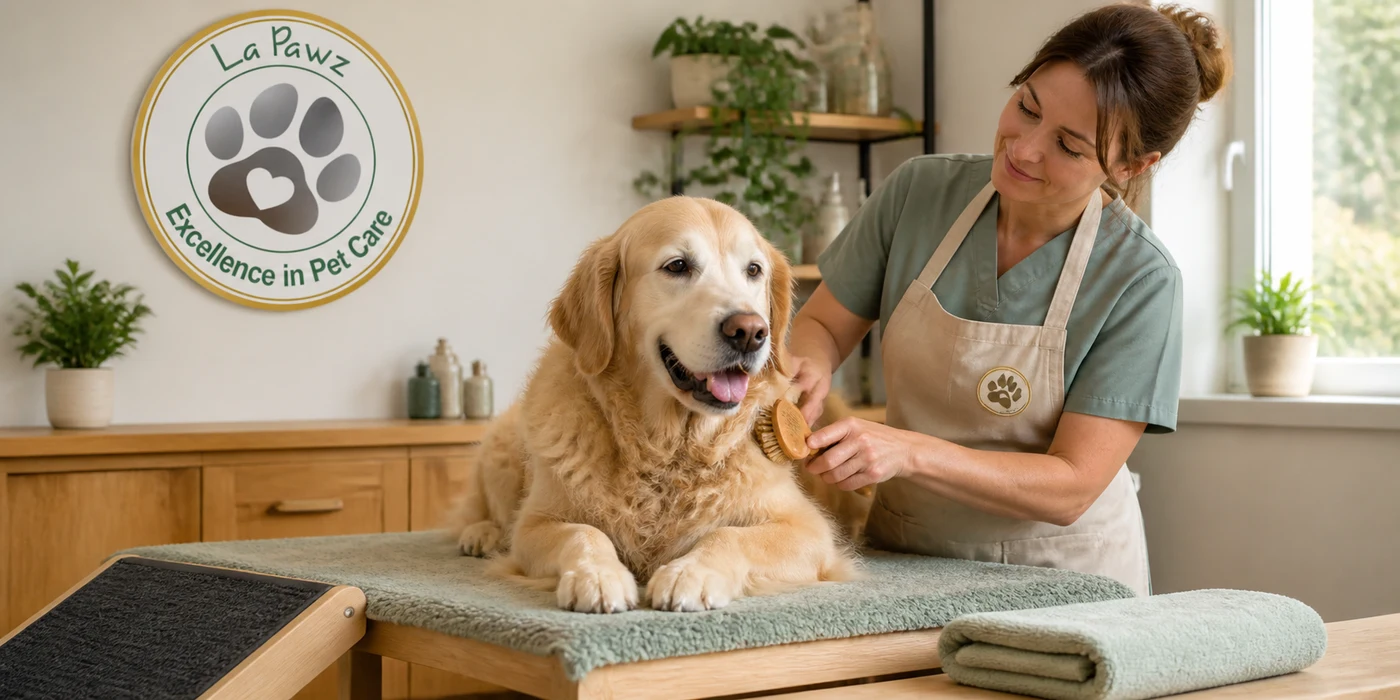
Older dogs still benefit from clean coats, manageable nails, tidy faces and sanitary areas, and regular observation. The difference is often how the grooming is delivered. A senior-friendly visit prioritizes comfort, balance, patience, and the dog’s current ability—not the perfect finish at any cost.
Share what changed
Before the appointment, tell the groomer about changes in mobility, hearing, vision, stamina, balance, toileting, skin, or tolerance for touch. Describe how your dog gets into a car, stands on smooth floors, handles stairs, and reacts when feet or hips are touched.
Discuss known medical conditions and prescribed medication with your veterinarian. A groomer needs relevant handling instructions, but decisions about pain control, sedation, or medical stability belong with the veterinary team.
Choose practical priorities
A long, elaborate style may become difficult for a dog who tires quickly. A shorter, easier-care trim can reduce brushing time and future appointment length. Prioritize areas that affect daily comfort:
- Nails that support stable movement
- Hair around eyes and the sanitary area
- Mats or compacted coat that pull on skin
- Paw-pad hair that may reduce traction
- Gentle cleaning and thorough drying
The American Animal Hospital Association’s senior-care guidance encourages individualized care for aging pets and monitoring of physical and behavioral changes.
Make standing easier
Stable, nonslip footing helps dogs who are weak or uncertain. Some dogs benefit from supported positions, more sitting or lying down, and fewer changes between surfaces. A groomer may need to modify technique or stop before every cosmetic detail is complete.
At home, use a nonslip mat for brushing. Keep sessions short. Approach where a dog with reduced vision or hearing can notice you, and avoid forcing a painful range of motion.
Keep appointments consistent
Waiting longer between visits can make the next appointment more demanding. Tangling, overgrown nails, dense undercoat, and extended drying add time. A shorter, predictable interval may allow each visit to be simpler.
For dogs who find full appointments tiring, ask whether essential tasks can be prioritized or split. The ideal schedule depends on coat, health, tolerance, transportation, and home maintenance.
Watch for changes, then call the right professional
Grooming gives people a close view of the body. A groomer might notice a new visible lump, skin change, nail issue, odor, or change in posture. These observations are useful, but they are not diagnoses.
Contact a veterinarian about pain, sudden weakness, collapse, breathing changes, persistent skin problems, growing lumps, open areas, or rapid behavioral change. The AVMA’s senior pet information outlines why regular veterinary examinations become increasingly important with age.
La Pawz’s Senior Dog Wellness Plan is designed around comfort-first pacing and recurring observations. Request a plan consultation and describe your dog’s current mobility and handling preferences so we can discuss an appropriate approach.