Plano Pet Care
Managing Seasonal Dog Shedding in North Texas
North Texas weather can make shedding feel continuous. A coat-specific routine controls loose hair without compromising the coat’s protective role.
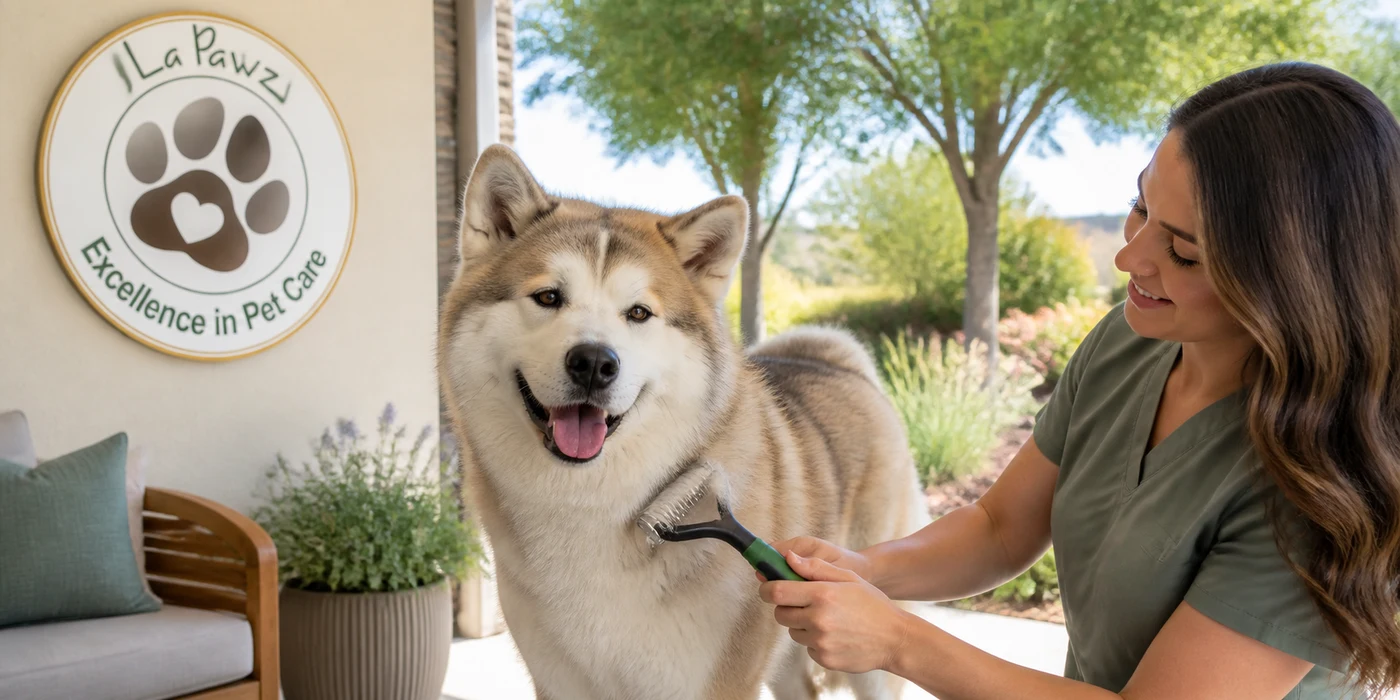
Seasonal shedding in North Texas rarely follows a perfect spring-and-fall calendar. Indoor climate control, changing daylight, abrupt temperature swings, and individual coat cycles can make loose undercoat appear for weeks—or seem nearly continuous.
The practical answer is regular removal of loose coat, not shaving every shedding dog.
Understand the double coat
Many retrievers, shepherds, huskies, Australian shepherds, Great Pyrenees, and similar breeds have a dense undercoat beneath protective outer hairs. The undercoat changes with season and environment. When it releases, loose fibers can compact unless they are brushed and dried out thoroughly.
The American Kennel Club’s double-coat overview describes the different jobs of the undercoat and outer coat and explains why routine brushing is important.
Use a routine, not a marathon
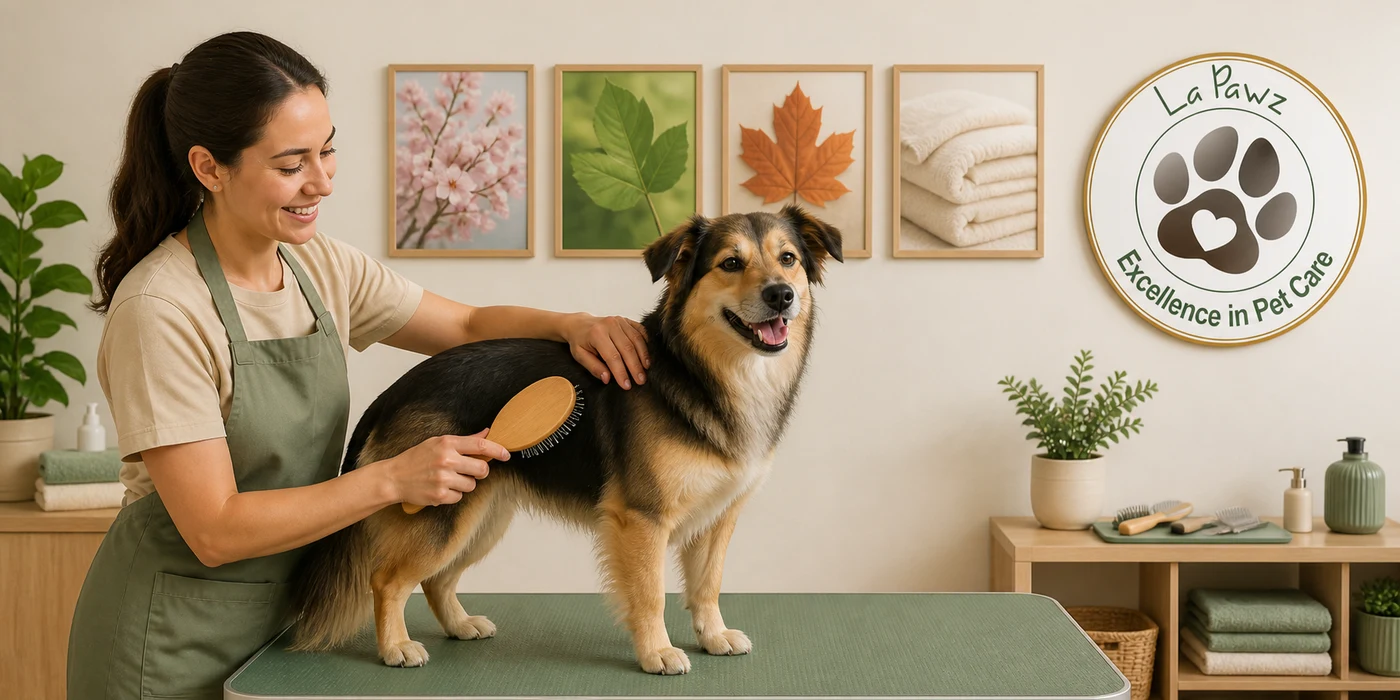
A short, thorough session several times a week is often more comfortable than a long catch-up session. Work in small areas and brush all the way through the coat without scraping the skin. High-friction areas behind ears, around the hindquarters, and under furnishings may need extra attention.
The correct tool depends on coat length and density. A slicker, pin brush, comb, undercoat rake, or other tool can be useful when selected and used properly. Ask a groomer to demonstrate technique on your dog; aggressive de-shedding tools can damage coat or irritate skin when overused.
Bathing and drying matter
A coat-appropriate bath loosens debris and shed hair. Thorough rinsing is essential. Professional high-velocity drying can separate coat and move loose undercoat that brushing alone misses.
Never leave a dense coat damp close to the skin. Persistent moisture can contribute to odor, tangling, and irritation. If you bathe at home, work carefully, use dog-formulated products, and make sure the dog is comfortable with the drying process.
Think twice before shaving
Shaving a double coat does not stop the shedding cycle; it only shortens the hairs being shed. Regrowth can be slow or uneven, and the outer coat’s protective function is reduced while short.
There are individual reasons a veterinarian or groomer may recommend clipping—such as severe matting, a medical procedure, or care limitations—but heat alone is not a universal reason to shave a double coat.
North Texas heat still requires planning
Coat care does not replace heat precautions. Provide shade and water, limit strenuous activity during hotter hours, and never leave a dog in a parked vehicle. The American Veterinary Medical Association’s warm-weather safety guidance covers heat risk and warning signs.
Heavy panting, weakness, confusion, vomiting, collapse, or very red gums can signal an emergency. Move the dog out of heat and seek veterinary help promptly.
When shedding may be more than seasonal
Normal shedding varies. Sudden bald areas, inflamed skin, persistent scratching, strong odor, sores, or a major coat change deserves veterinary evaluation. Groomers can describe visible changes but cannot diagnose their cause.
For predictable maintenance, explore La Pawz’s Double-Coat Maintenance Plan or request a grooming appointment. A schedule can be adjusted around your dog’s coat cycle rather than waiting for loose hair to take over the house.